Pentecost University
  • Apply Online
  • About
    • Vision, Mission & Values
    • The Vice-Chancellor
    • Administration
    • Pentecost University Council
    • Stakeholders
      • The Church of Pentecost
      • The Church of Pentecost Chairman Education Foundation (COPCEF)
      • Alumni
      • Parents and Guardians
      • Donors
      • Employers
      • Hiring Our Facilities
    • University Anthem
    • Collaborations
      • others
      • CIPS
    • Contact
      • Public Relations & Media Unit
      • Directions to Campus
      • Schedule a Visit
      • Staff Directory
      • Helplines
      • Contact Us
  • Admissions
    • Entry Requirements
    • Application Procedure
    • Application Forms
    • Tuition Fees and Student Online Payment
    • Mature Applicants
  • ACADEMICS
    • Undergraduate Programmes
    • Postgraduate Studies & Research
      • Message from the Director
      • Admission Requirements
      • Postgraduate Studies & Research Programmes
      • Tuition Fees
      • Sessions
      • Frequently Asked Questions
    • College of Foundation and Professional Studies (COFOPS)
    • Pentecost Centre for the study of Unreached People Groups (PCUPGs), Africa
    • Centre for Strategic Philanthropy & Social Investment (CESPSI)
    • Capacity Building, Corporate Engagement & Innovation Unit (CCI-Unit)
    • Our Library
      • Welcome to our Library
      • About Library
      • Library Catalogue
      • Library Help
      • Research
        • PentVars Business Journal
        • Students’ Research & Project Work
        • Staff Research & Publications
      • E-Resources
      • Online Public Access Catalogue (OPAC)
    • Faculties
      • International Digital Centre
      • Faculty of Law (LL.B)
      • School of Theology, Mission & Leadership (STML)
      • Faculty of Engineering Science and Computing (FESAC)
      • Faculty of Business Administration (FBA)
      • Faculty of Health and Allied Sciences (FHAS)
    • Academic Calendar
    • Sessions/Schools
  • Student Life
    • Scholarship
    • International
      • Students Experience, Diversity and International Relations (SEDIR) Office
      • Application Process
      • Tuition Fees
      • Entry Requirements
      • Immigration Issues & Permits
      • Student Life
      • Partnerships
      • Frequently Asked Questions
      • Contact Us
    • Dean of Students
    • The Students’ Representative Council (SRC)
    • Chaplaincy
    • Counselling Unit
    • University Assembly
    • Mentorship
    • Lodging
    • Clubs and Societies
    • Sports and Entertainment
    • Photo Gallery
  • News
  • Vacancies
  • Apply Online
  • About
    • Vision, Mission & Values
    • The Vice-Chancellor
    • Administration
    • Pentecost University Council
    • Stakeholders
      • The Church of Pentecost
      • The Church of Pentecost Chairman Education Foundation (COPCEF)
      • Alumni
      • Parents and Guardians
      • Donors
      • Employers
      • Hiring Our Facilities
    • University Anthem
    • Collaborations
      • others
      • CIPS
    • Contact
      • Public Relations & Media Unit
      • Directions to Campus
      • Schedule a Visit
      • Staff Directory
      • Helplines
      • Contact Us
  • Admissions
    • Entry Requirements
    • Application Procedure
    • Application Forms
    • Tuition Fees and Student Online Payment
    • Mature Applicants
  • ACADEMICS
    • Undergraduate Programmes
    • Postgraduate Studies & Research
      • Message from the Director
      • Admission Requirements
      • Postgraduate Studies & Research Programmes
      • Tuition Fees
      • Sessions
      • Frequently Asked Questions
    • College of Foundation and Professional Studies (COFOPS)
    • Pentecost Centre for the study of Unreached People Groups (PCUPGs), Africa
    • Centre for Strategic Philanthropy & Social Investment (CESPSI)
    • Capacity Building, Corporate Engagement & Innovation Unit (CCI-Unit)
    • Our Library
      • Welcome to our Library
      • About Library
      • Library Catalogue
      • Library Help
      • Research
        • PentVars Business Journal
        • Students’ Research & Project Work
        • Staff Research & Publications
      • E-Resources
      • Online Public Access Catalogue (OPAC)
    • Faculties
      • International Digital Centre
      • Faculty of Law (LL.B)
      • School of Theology, Mission & Leadership (STML)
      • Faculty of Engineering Science and Computing (FESAC)
      • Faculty of Business Administration (FBA)
      • Faculty of Health and Allied Sciences (FHAS)
    • Academic Calendar
    • Sessions/Schools
  • Student Life
    • Scholarship
    • International
      • Students Experience, Diversity and International Relations (SEDIR) Office
      • Application Process
      • Tuition Fees
      • Entry Requirements
      • Immigration Issues & Permits
      • Student Life
      • Partnerships
      • Frequently Asked Questions
      • Contact Us
    • Dean of Students
    • The Students’ Representative Council (SRC)
    • Chaplaincy
    • Counselling Unit
    • University Assembly
    • Mentorship
    • Lodging
    • Clubs and Societies
    • Sports and Entertainment
    • Photo Gallery
  • News
  • Vacancies

Health Education

  • Home
  • News
  • Health Education
  • Understanding the Waves of a Pandemic; The Third Wave of Covid-19 – By Dr Kyei, Mr Arthur-Mensah

Understanding the Waves of a Pandemic; The Third Wave of Covid-19 – By Dr Kyei, Mr Arthur-Mensah

  • Posted by pentvars
  • Categories Health Education, News
  • Date Jun 25, 2021
  • Comments 9,397 comments

What is a wave?

Since the emergence of the coronavirus disease 2019 (COVID-19), caused by the severe acute respiratory syndrome coronavirus 2 (SARS-CoV-2), in December 2019, the COVID-19 has spread throughout the world, and has been described as occurring in several peaks in waves.

The term “wave” as used in infectious disease cycles, is generally used to describe the rising and declining trends of infections over a prolonged period. Naturally, epidemics and/or pandemic infection cases fluctuate by surging and falling intermittently, with a possibility of rising to a peak or declining and/or never to rise again. The wave phenomenon of epidemics and/or pandemics when presented diagrammatically resembles the frequency curves (see Figures 1&2). Several infections are seasonal in nature, and they recur after fixed time intervals.
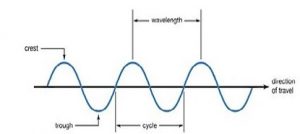
 

Figure 1: Frequency curve

Source: Encyclopedia Britannica, (2021).
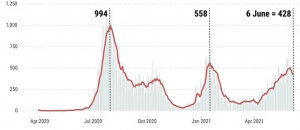
Figure 2: COVID-19 infection rates (Canada)

Source: Encyclopedia Britannica, (2021).


The waves of COVID-19

COVID-19 has continued relentlessly for the last eighteen months, but in every geographical area it has affected, there have been periods of surges that have been followed by periods of reduced infections. Infectious disease waves differ across countries, regions, state, and cities and each is distinct in its own science. Concerning the COVID-19 pandemic, some countries have experienced their fourth wave whilst others are yet recovering from their second wave. Typically, such series of waves manifest over different time frames and the epidemics and/or pandemic might not be necessarily over until affected countries, regions, state, and cities have gone through the impact of the wave.

Regarding the COVID-19 pandemic, the first wave referred to the onset of the infection and its primal consequences in populations. It was the period when all clinical cases of infections and diseases, hospital admissions, hospital readmissions, disabilities and deaths were directly linked to COVID-19. Technically, any country that recorded any positive case of COVID-19 experienced the first wave.

The second wave referred to the rise in active cases after the microbiology of the virus and its interaction with man was known and infection prevention and control practices were implemented to limit the spread of the infection. Technically, any country that recorded surges in positive cases of COVID-19 after the implementation of the preventive measures to the virus experienced the second wave.

The third wave is the increase in the number of active cases after the decline in cases from the second wave whose impact is on the social determinants of health. Many factors combine to affect the health of individuals. Whether people are healthy or not, is determined by their individual characteristics and behaviour, their physical environment and their social and economic environment (WHO, 2017). Examples of the physical environment and the social and economic environment of people include their place of residence, state of their environment, income levels, educational levels, unemployment levels, availability of social support services, microeconomic variables, relationships with family and friends etc. However, the major elements include access and use of health care services. The third wave will worsen health inequalities through severe economic injuries. The health impacts caused by this worsening economic recession will be complex especially where health care might just be the benefit of a few. For instance, many hospitals around the globe are already short-staffed and overwhelmed with patients, and some are short on oxygen, forcing a rationing of care. Simply put, the third wave is the increase in infections due to the citizens of a country letting their guard down on the preventive measures of the infections, due to harsh economic situations, which results in pressure and inequalities in health care seeking services where only the able can access health care. Complications of this wave is that, people die not directly from COVID-19, but due to the economic fallout; job losses and other financial pressures that are known from historical recessions to increase physical and mental stress. This wave is not far from many countries.

Based on the ongoing discussion, we ask these questions as a country;

  1. How far is Ghana in its second wave and how well is the country coping?
  2. Is Ghana in its third wave?
  3. Can Ghana experience the third wave and what preparations are in place to meet any such possibilities?

Your response is as good as ours!!!

To prevent the third wave, countries must act now to repair, fix and strengthen their economies. They also need to prioritize access and utilization to basic and specialized health care needs of their citizens else the countries risk continuum into subsequent waves which will impact generations unborn.

The lasting impacts of the COVID-19 pandemic, both positive and negative, can be overwhelming, yet the reality of this pandemic is that: the virus has got into everything about our daily lives.

As scientists work around the clock to eliminate the virus, let us continue to act responsibly and adhere to the precautions and preventive measures using the Swiss Cheese respiratory virus intervention model (see Figure 3).
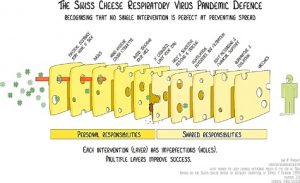
Figure 3: The Swiss Cheese respiratory virus intervention model

Source: www.uihc.org/covid-toolkit


By:

Mr. Reginald Arthur-Mensah Jnr & Dr. Abigail Kyei

Department of Nursing and Midwifery, Pentecost University.


References

Encyclopedia Britannica (Accessed June 17, 2021)

How to stop the COVID-19: The Swiss Cheese model. Retrieved from www.uihc.org/covid-toolkit University of Iowa Health Care. (Accessed June 17, 2021).

WHO, (2017). Determinants of Health. Retrieved from https://www.who.int/news-room/q-a-detail/determinants-of-health (Accessed June 17, 2021).


  • Share:
pentvars

Previous post

PU QUIZ Competition Guide
Jun 25, 2021

Next post

Pentecost University Sweeps 5 Top Awards in One Ceremony
Jul 19, 2021

You may also like

  • WhatsApp Image 2025-07-11 at 02.52.03 (1)
    RECRUITMENT OF A PHD RESEARCH FELLOW
    14 July, 2025
  • WhatsApp Image 2025-07-05 at 13.14.56_f5a5bbd4
    Pentecost University Invites Bids for Major Engineering Village Project
    9 July, 2025
  • AN6A0732
    Pentecost University Partners with Alveus Development to Train 10,000 Electricians and Engineers in Sustainable Transportation and Renewable Energy
    2 June, 2025

Leave A Reply

Your email address will not be published. Required fields are marked *

Search

Quick Links

  • E-Learning
  • IT Certifications
  • Email
  • E-Library
  • E-Portal
  • Resources
  • Photo Gallery
  • Staff Directory

Latest News

Pentecost University Expands Community Impact Through Innovation Hub Partnership with Alex Nerda Centre
02Feb2026
Pentecost University and Vice-Chancellor Honoured with Dual Awards
01Oct2025

Admissions

  • Application Procedure
  • Academic Calendar
  • Tuition Fees and Student Online Payment
  • Application Forms
  • Entry Requirements
  • Student Online Payment

Online Services

  • Parents Portal
  • E-Learning
  • E-Library
  • Undergradraduate ePortal
  • Postgraduate ePortal
  • IDC – Engineering Programme
  • Online Public Access Catalogue (OPAC)

Quick Links

  • Alumni
  • Our Library
  • Photo Gallery
  • The Church of Pentecost
  • Pentvars Journal
  • FAQs
  • Staff Directory

Contact

P. O. Box KN 1739
Kaneshie, Accra
info@pentvars.edu.gh
+233283094284/+233302417057/8
Pentecost University College campus location

© 2021 Pentecost University. All Rights Reserved Developed By: Samuel Armah (Alumni - 2011) & Emmanuel Assimeku (Alumni - 2012)

Sponsored By: Engisys Limited